

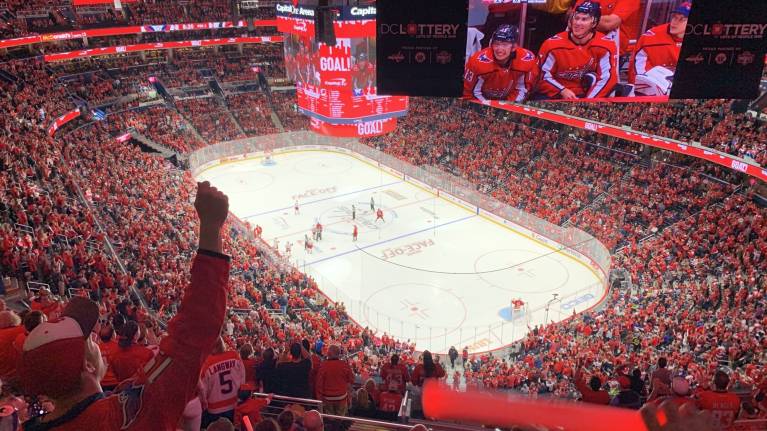
Are you trying to get into ice hockey? Perhaps you’ve bought tickets to an NHL (National Hockey League) game and you’re not sure where to start with all the rules. Despite being one of the big 4 American sports leagues, the unique format of NHL can make it seem daunting to follow, but don’t worry, Koobit has got your covered.
- NHL History and Teams
- NHL Game Format
- NHL Player Positions
- NHL Key Rules
- NHL Season Format
- Famous NHL Players
- NHL Terms Glossary
- Attending an NHL Game
NHL History and Teams
The NHL was established in 1917 following the dissolution of the National Hockey Association (NHA), which had previously competed for the Stanley Cup when it was an interleague competition. By 1926, the NHL became the sole league contesting the Stanley Cup.
Initially, the NHL comprised 4 teams, all based in Canada—hence the name “National.” The league expanded into the United States in 1924 with the addition of the Boston Bruins. From 1942 to 1967, the NHL consisted of 6 teams, now known as the “Original Six”: the Montreal Canadiens, Boston Bruins, New York Rangers, Chicago Blackhawks, Toronto Maple Leafs, and Detroit Red Wings.
In 1967, the league doubled in size and continued to grow, reaching 18 teams by 1974, 21 teams by 1979, and 30 teams by 2000. The Vegas Golden Knights and Seattle Kraken joined in 2017 and 2021, respectively, becoming the NHL’s 31st and 32nd teams. Before the 2024–25 season, the Arizona Coyotes franchise was disbanded, leading to the creation of a new team based in Utah. The league now consists of the following teams:
Eastern Conference (Metropolitan Division)
- Carolina Hurricanes
- Columbus Blue Jackets
- New Jersey Devils
- New York Islanders
- New York Rangers
- Philadelphia Flyers
- Pittsburgh Penguins
- Washington Capitals
Eastern Conference (Atlantic Division)
- Boston Bruins
- Buffalo Sabres
- Detroit Red Wings
- Florida Panthers
- Montreal Canadiens
- Ottawa Senators
- Tampa Bay Lightning
- Toronto Maple Leafs
Western Conference (Central Division)
- Chicago Blackhawks
- Colorado Avalanche
- Dallas Stars
- Minnesota Wild
- Nashville Predators
- St. Louis Blues
- Utah Hockey Club
- Winnipeg Jets
Western Conference (Pacific Division)
- Anaheim Ducks
- Calgary Flames
- Edmonton Oilers
- Los Angeles Kings
- San Jose Sharks
- Seattle Kraken
- Vancouver Canucks
- Vegas Golden Knights

NHL Game Format
Regulation
Games consist of 3 periods of regulation time, each lasting 20 minutes of stop-time play, meaning there are lots of pauses in play for events such as goals, penalties, offsides, icing, injuries, and other official reviews or interruptions, and players will switch on and off the rink depending on defensive or offensive play. This means that despite so many stoppages, the game is always fast-paced and there’s a lot to keep your eye on. In regulation, there are 5 players on the ice (generally 3 forwards, 2 defensemen) per team during even-strength play as well as one goaltender. Teams attempt to score by shooting the puck into the opposing team's net. Goals are reviewed when necessary for offside or interference violations.
Overtime and Shootouts
If a game is tied at the end of regulation, it will proceed to overtime. In the regular season, this is a 5-minute 3-on-3 sudden-death period where the first team to score wins. If no one scores, a shootout occurs where 3 players from each team take penalty shots, and if it is still tied, the shootout continues in a sudden-death format.
In the NHL playoffs, there are no shootouts with 20-minute overtime periods of 5-on-5 play continuing until a team scores.
League Scoring
In NHL regular season games, teams earn points based on their results: 2 points for a win, 1 point for a loss in overtime or a shootout, and 0 points for a loss in regulation. At the end of the season, the team with the highest total points across all divisions is awarded the Presidents’ Trophy, while the top-scoring team in each division is named the division champion.
From each conference, 8 teams qualify for the NHL playoffs (the top 3 teams in each division plus the 2 conference teams with the next highest number of points). The playoffs are a knockout tournament, with teams competing in best-of-seven series to advance through each round. When only one team remains in each conference, they face off in the Stanley Cup Finals to determine the NHL champion.
NHL Player Positions
In the NHL, there are 6 player positions, divided into forwards, defensemen, and the goaltender. Here's a breakdown:
Forwards
- Center - the playmaker and often the most versatile forward, the Center takes faceoffs, creates scoring opportunities, plays a 2-way game, supporting both offense and defense, and is usually positioned in the middle of the ice, facilitating puck movement
- Left Wing (LW) - positioned on the left side of the ice, left wing focuses on offensive plays and scoring, supports the defense on their side, and works along the boards and in front of the net
- Right Wing (RW) - positioned on the right side of the ice, right wing is similar to the left wing, but operates on the opposite side and is known for shooting and passing, often favouring shots from the right side
Defensemen
- Left Defenseman (LD) - positioned on the left side of the blue line, the left defenseman prevents opposing players from entering the defensive zone, blocks shots and clears the puck, and contributes to the offense with point shots and passes
- Right Defenseman (RD) - positioned on the right side of the blue line, the right defenseman is similar to the left defenseman, but on the right side and plays a key role in breaking out of the defensive zone
Goaltender
- Goaltender (G) - the last line of defense, the goalie stops pucks from entering the net, communicates with defensemen to direct the play, and often stays in or near the crease but can handle the puck to assist teammates
While these are the main positions, players often adopt specialised roles based on their skills, such as:
- Power Play Specialist - skilled at scoring or creating opportunities with a man advantage
- Penalty Killer - strong defensive players who excel at shorthanded play
- Enforcer - physical players who protect teammates and deter aggressive opponents
- Playmaker/Sniper - forward roles emphasising passing or shooting, respectively
Each position plays a critical role in the success of a team.
NHL Key Rules
There are some unique rules in ice hockey and NHL games have a detailed set of rules. Here’s a quick overview of the key rules:
- Icing: a team is not allowed to shoot the puck across both the center red line and the opposing team's goal line without it being touched. This results in a faceoff in the offending team’s zone
- Offside: a player cannot enter the offensive zone (past the blue line) before the puck does
- Goals: a goal is scored when the puck completely crosses the goal line between the posts and beneath the crossbar, as long as it wasn’t kicked in or directed in with a hand
- Penalties: assessed for rule violations and can result in a player spending time in the penalty box:
- Minor Penalty (2 minutes): for infractions like tripping, slashing, or interference
- Major Penalty (5 minutes): for more severe actions, like fighting
- Misconduct (10 minutes): typically given for unsportsmanlike conduct
- Game Misconduct: ejection from the game for serious infractions
- Double Minor (4 minutes): for more severe minor infractions, like high-sticking causing injury
- Penalty Shots: awarded when a clear scoring opportunity is illegally prevented by an opposing player
- Goaltending: goalies cannot play the puck outside of the trapezoid behind their net. Goaltenders may freeze the puck in their crease to stop play but cannot delay the game intentionally
- Faceoffs: used to restart play after a stoppage, players face each other as the ref drops the puck in front of them. The location depends on the reason for the stoppage. Players must line up properly, and only the center can take the faceoff
- Equipment: players must wear approved protective gear, including helmets, gloves, and skates. Goaltenders have specific equipment regulations to ensure fairness and safety
- Challenges and Video Reviews: coaches can challenge certain plays (e.g., offsides or goalie interference), but an unsuccessful challenge results in a minor penalty for delay of game. Officials can review goals to confirm if the puck crossed the line or if a rule violation occurred
- Fighting: while fighting is penalised (usually a major penalty), it is not banned outright. Players involved in fights may also receive misconduct penalties depending on the severity

NHL Season Format
The NHL comprises 32 teams (also known as franchises): 25 in the United States and 7 in Canada. The league is separated into a Western Conference (split into Central and Pacific Divisions) and an Eastern Conference (split into Atlantic and Metropolitan Divisions) with the teams listed in the NHL History and Teams section above.
Regular Season
After a selection of non-competitive preseason games, the regular season runs from October to April. Teams play each other in an arranged schedule with each playing a total of 82 games. Teams from each conference – Western and Eastern – play 28 games in their own division (4 against each of their 7 other divisional opponents) and 24 games against the 8 opponents in the other division in their conference (3 games against every team). All teams play every team in the other conference twice, at home and away.
A win is worth 2 points, losing in overtime or a shootout is 1 point, and a loss in regulation time is 0 points. At the end of the season, the team with the most points across all divisions wins the Presidents’ Trophy, and the highest scorer in each division is crowned division champion.
Playoffs
At the conclusion of the regular season, the NHL playoffs begin with 16 of the league’s 32 teams qualifying: there are 8 teams from each conference: the top 3 teams in each division plus the 2 conference teams with the next highest number of points. The playoffs consist of 4 rounds of best-of-seven series to determine the league champion and Stanley Cup winner.
In the First Round, teams are divided into 2 brackets based on their divisions. Each bracket includes the top 3 divisional qualifiers and one wildcard team. The wildcard team with the lowest seed faces the division winner with the best regular-season record, while the other wildcard plays the remaining division winner. Additionally, the second-place and third-place teams from each division compete against each other.
The winners of the First Round advance to the Second Round, consisting of 8 teams competing in 4 best-of-seven series. The Second Round winners move on to the Conference Finals, and the champions of each conference advance to the Stanley Cup Finals. In the Finals, the Eastern and Western Conference champions compete in a best-of-seven series to determine the Stanley Cup champion.
In all playoff rounds, the higher-seeded team enjoys home-ice advantage, hosting 4 of the 7 games (if needed) in their home venue. For the Stanley Cup Finals, home-ice advantage is awarded to the team with the best regular-season points total.
Famous NHL Players
The NHL has produced many legendary players throughout its history, each with unique skills and achievements. Here are some of the most famous NHL players and what makes them iconic:
Wayne Gretzky ("The Great One")
- Teams: Edmonton Oilers, Los Angeles Kings, St. Louis Blues, New York Rangers
- NHL Career: 1979-1999
- Achievements:
- Holds numerous NHL records, including most career points (2,857) and goals (894)
- Won 4 Stanley Cups with the Edmonton Oilers
- Won the Hart Trophy as the league’s MVP 9 times
- Known for his exceptional vision, hockey IQ, and playmaking ability
Mario Lemieux
- Teams: Pittsburgh Penguins
- NHL Career: 1984-2006
- Achievements:
- Led the Penguins to 2 Stanley Cup victories as a player (1991, 1992) and 3 more as an owner
- Overcame significant health challenges, including Hodgkin's lymphoma
- One of the most skilled players in NHL history, combining size, speed, and scoring ability
- Scored 1,723 points in 915 career games
Gordie Howe ("Mr. Hockey")
- Teams: Detroit Red Wings, Hartford Whalers
- NHL Career: 1946-1980
- Achievements:
- Played professional hockey across 5 decades
- Won 4 Stanley Cups with the Red Wings
- Known for his toughness and scoring ability, coining the "Gordie Howe hat trick" (goal, assist, fight)
- Scored 801 career NHL goals
Bobby Orr
- Teams: Boston Bruins, Chicago Blackhawks
- NHL Career: 1966-1979
- Achievements:
- Revolutionised the role of defensemen, emphasising offensive play
- Won the Norris Trophy as the NHL's best defenseman 8 times
- Led the Bruins to 2 Stanley Cups and scored the famous overtime goal in 1970
- First defenseman to lead the league in scoring
Sidney Crosby
- Team: Pittsburgh Penguins
- NHL Career: 2005-Current
- Achievements:
- Led the Penguins to 3 Stanley Cup championships (2009, 2016, 2017)
- Hart Trophy winner as league MVP 2 times
- Known for his leadership, skill, and clutch performances
- Scored the "Golden Goal" for Team Canada in the 2010 Olympics
Alexander Ovechkin
- Team: Washington Capitals
- NHL Career: 2005-Current
- Achievements:
- One of the greatest goal-scorers in NHL history, chasing Gretzky's all-time record
- Won the Stanley Cup in 2018
- Won the Maurice "Rocket" Richard Trophy for leading the league in goals 9 times
- Known for his powerful shot and physical style of play
Patrick Roy
- Teams: Montreal Canadiens, Colorado Avalanche
- NHL Career: 1984-2003
- Achievements:
- One of the greatest goaltenders of all time
- Won 4 Stanley Cups (2 with Montreal, 2 with Colorado)
- Won the Conn Smythe Trophy as playoff MVP 3 times
- Known for popularising the butterfly style of goaltending
Jaromír Jágr
- Teams: Pittsburgh Penguins, Washington Capitals, New York Rangers, and more
- NHL Career: 1990-2018
- Achievements:
- Second all-time in NHL points (1,921)
- Won 2 Stanley Cups with the Penguins
- Known for his longevity, playing into his 40s
- One of the most skilled and versatile forwards ever
Connor McDavid
- Team: Edmonton Oilers
- NHL Career: 2015-Current
- Achievements:
- Seen as one of the fastest and most skilled players of all time
- Multiple-time Hart Trophy winner
- Frequently leads the league in points and is known for his dynamic skating and playmaking
These players represent the best of hockey across different eras, each leaving an indelible mark on the NHL and inspiring fans worldwide.
NHL Terms Glossary
We’ve put together a short glossary of terms used in the NHL to help you understand the game:
- Backcheck - when a player skates back toward their defensive zone to disrupt an opponent's offensive play
- Body Check - a legal hit using the body to separate the puck carrier from the puck
- Breakaway - a situation where a player has no opposing defenders between them and the goalie
- Check - using the body or stick to impede an opponent’s movement or play on the puck
- Dump and Chase - a strategy where a team shoots the puck into the offensive zone and skates in to retrieve it
- Five-Hole - the space between a goalie’s legs
- Forecheck - applying pressure on the opposing team in their defensive zone to regain possession
- Hat Trick - when a player scores 3 goals in a single game (fans might actually throw hats onto the ice if this happens)
- Neutral Zone - the area between the 2 blue lines
- Penalty Box - the area where penalised players serve their time
- Penalty Kill - the strategy used by a team to defend against an opponent's power play
- Power Play - a situation where a team has more players on the ice due to an opponent’s penalty
- Shutout - when a goalie prevents the opposing team from scoring for the entire game
- Sin Bin - slang for the penalty box
- Stick Check - using the stick to knock the puck away or disrupt an opponent
- Zamboni - the machine used to resurface the ice
Attending an NHL Game
If you want to attend an NHL game, take a look at these useful links: