Rowing has appeared wherever people and water exist together. While this ancient practice goes back many thousands of years BC, the earliest record of competitive regattas dates to the 1270s. The sport has evolved through its many centuries, with modern athletes reaching extraordinary speeds on the water.
📜 History of Rowing
The first known representation of a rowing boat was discovered in Finland, having been drawn in 5800 BC. Thousands of years later, in 1274, Venice hosted the first recorded regatta – a competition between gondoliers and other boatmen in a range of different rowing boats.
Another key moment in the history of rowing came in 1829, when Oxford and Cambridge first took the Thames for their now-legendary Boat Race. This has been identified as the origin of modern sport rowing, which grew rapidly in popularity across England and wider Europe in the 19th century.
In 1892, representatives from rowing clubs all over western Europe met to hold a congress on the future of competitive rowing. From this meeting, the “Fédération Internationale des sociétés d’aviron” was born, becoming the first ever International Sports Federation.
Rowing made its debut as an Olympic sport in 1900, although women’s events were not added until 1976. The first World Rowing Championships were hosted in Lucerne, Switzerland in 1962, and women’s events were included from 1974 onwards.
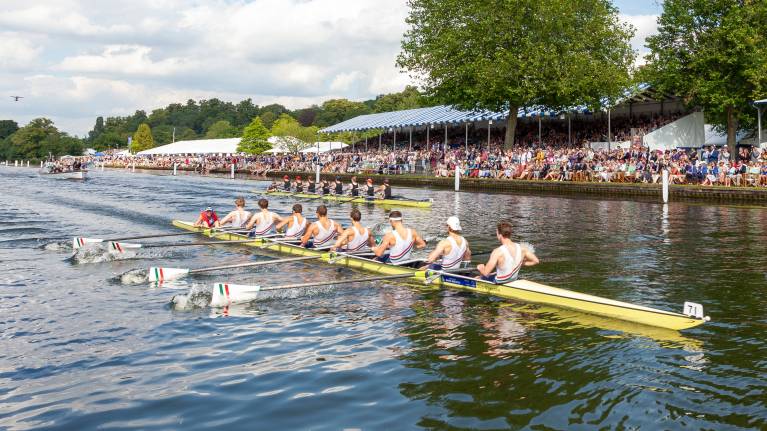
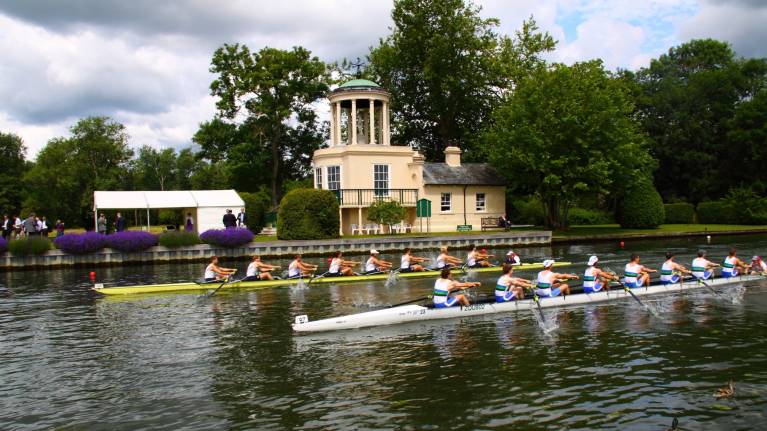
Some of the biggest events in modern rowing include The Boat Race (between Oxford and Cambridge), the annual Henley Royal Regatta, Rowing at the Olympic Games, and the World Rowing Championships.
💯 Rowing Rules & Scoring
The basic premise of rowing is very simple: generally, the boat that crosses the finish line in the quickest time is the winner. Boats and their crews vary considerably, however, so most regattas feature several different competition classes.
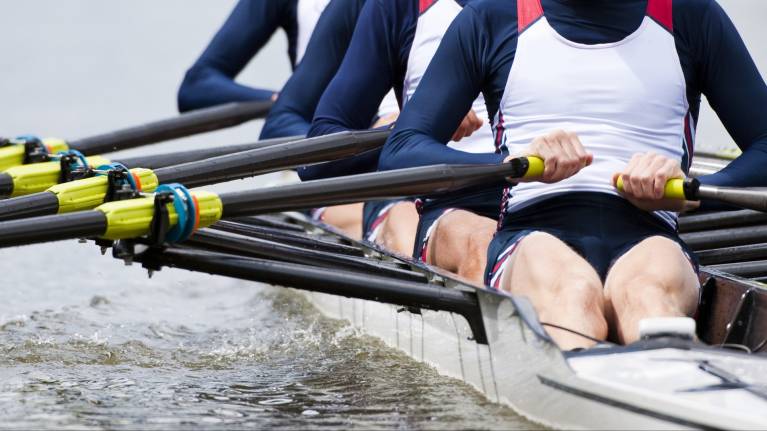
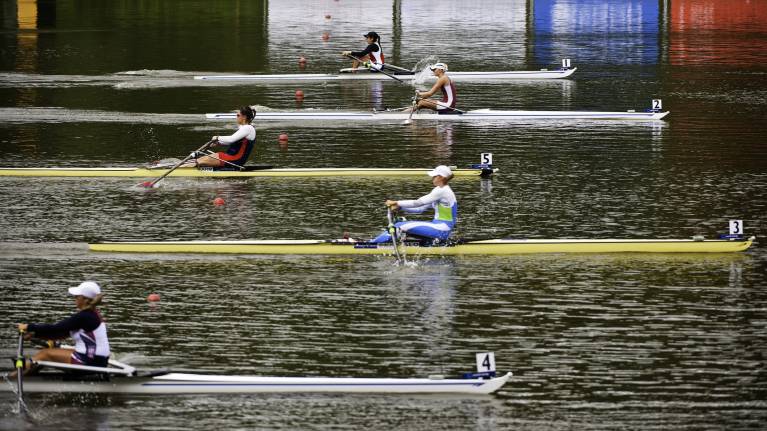
Classic inland racing boats feature wheeled seats that slide up and down as the athletes move. The rowers either hold a single oar (sweep rowing) or 2 oars (sculling), and this is one of the key factors in categorising regatta races.
Each boat is manned by 1, 2, 4, or 8 rowers, and crews typically compete only against other crews of the same size. An “eights” crew also has a coxswain (or cox) who steers and directs the crew as they row. A “fours” crew can be either coxed or coxless.
As well as traditional inland rowing, competitions may feature coastal rowing events or beach sprints, which involve set courses in open water.