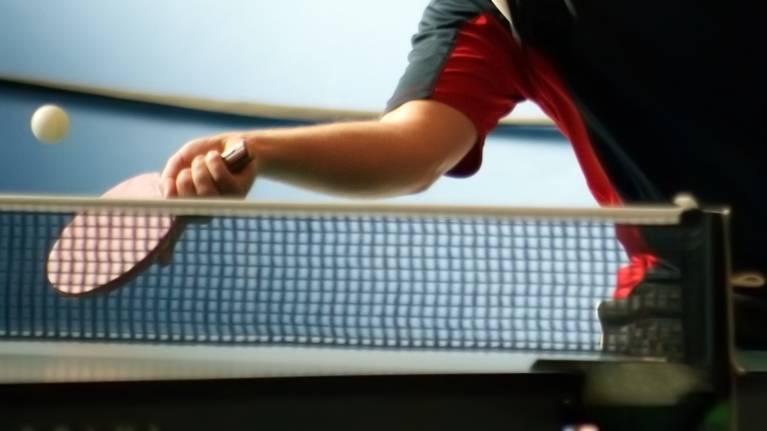
“Table tennis has given me the opportunity to push past my own boundaries. I have learnt the importance of hard work, discipline and failure through the sport.” – Tin-Tin Ho, professional table tennis player.
Table tennis exploded across the world in the 20th century, eventually becoming an Olympic sport in 1988. With new professional leagues appearing all the time, table tennis continues to grow and develop as a popular international spectator sport.
📜 History of Table Tennis
Table tennis, or ping-pong, began as an after-dinner game among the social elite in Victorian England. Some maintain that it was brought to the country by British military officers who developed the game in India in the late 19th century. Early competitors made makeshift nets and paddles out of books and hit golf balls to one another, but the popularity of ping-pong quickly inspired manufacturers to develop bespoke equipment. A major year for the sport came in 1901, when the traditional pimpled rubber was added to the wooden paddles and tournaments began to pop up throughout the country. A year later, an unofficial world championship was held, and in 1926 London played host to the first official World Championships.
Originally scored in the same way as lawn tennis, table tennis quickly developed its own systems of play and its own sporting legends. By the 1930s, the game was a hit in China, and its popularity as a spectator sport continues to grow across East Asia, Europe and, more recently, the United States. Table tennis players must cultivate lethally fast reflexes and carefully harnessed power, making this sport a joy to watch – if you can keep up with the pace!
💯 Table Tennis Rules & Scoring
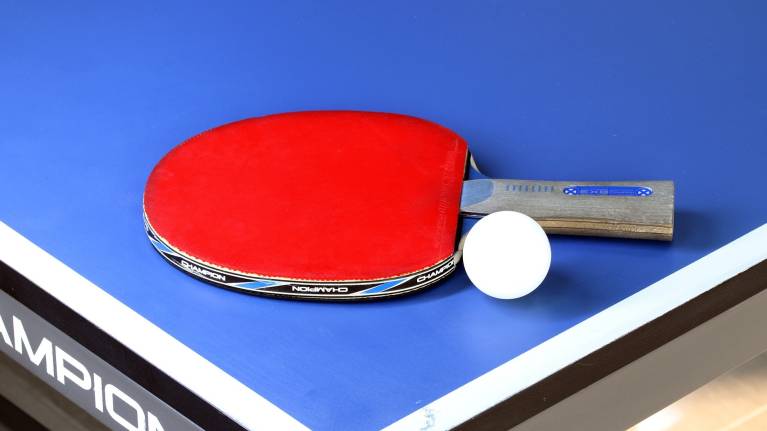
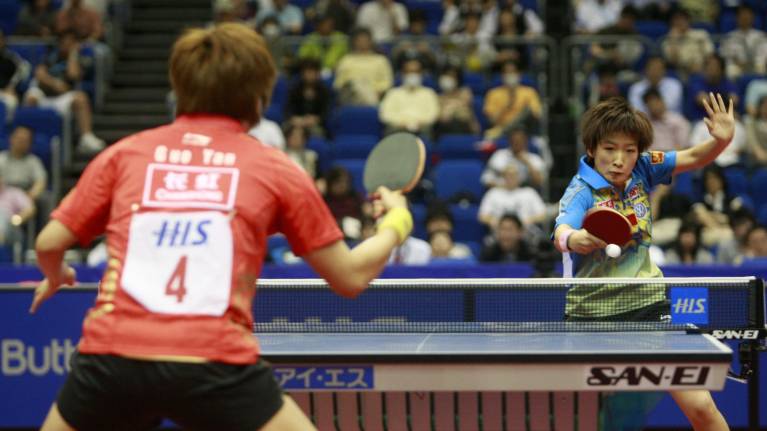
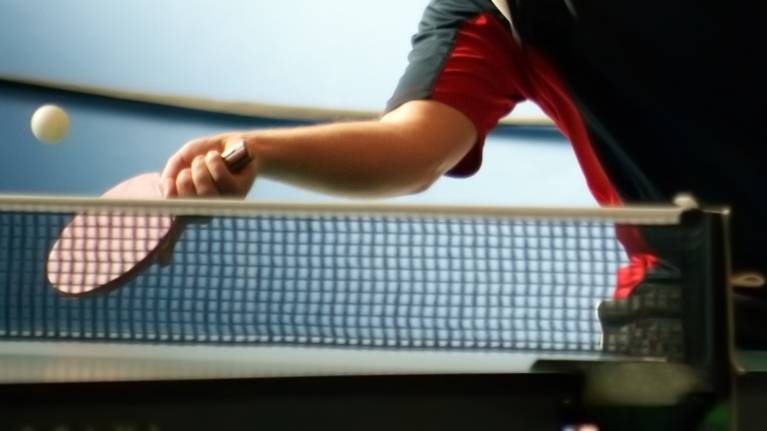
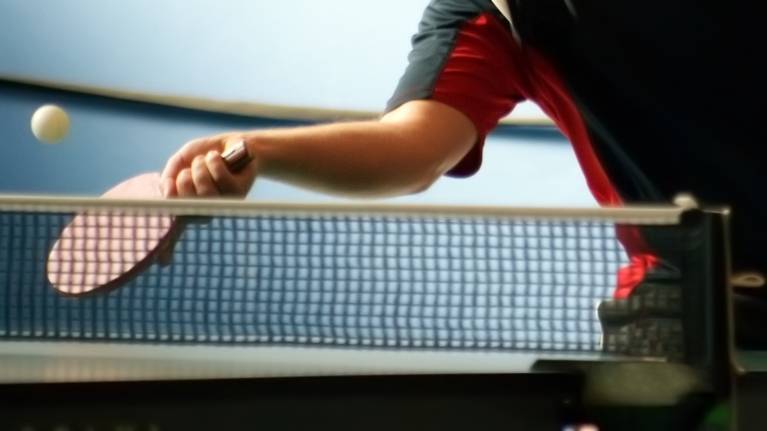
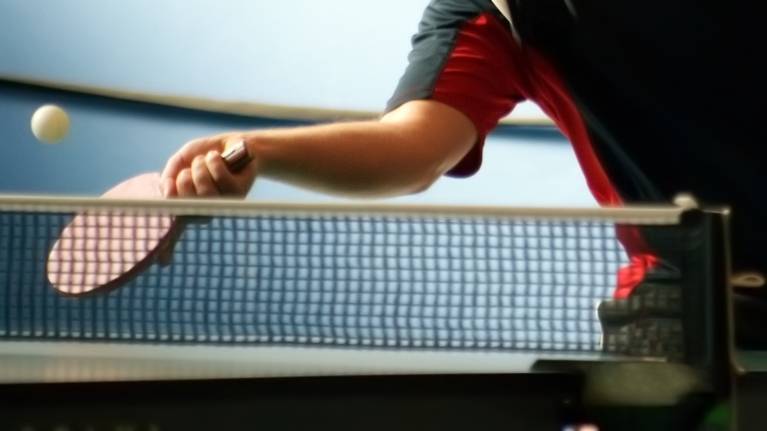
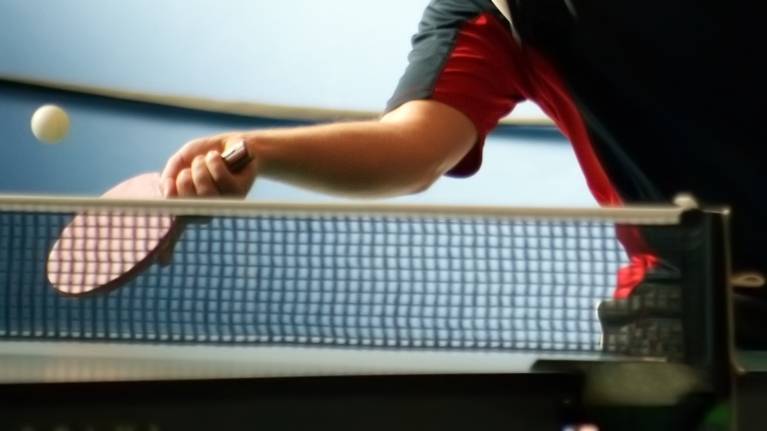
Table tennis involves players using paddles to hit a ball across a table, so that it bounces on one side, goes over the net in the middle, and then lands on the opposite side. Players win points if their opponents cannot return the ball properly, or if the opponent hits the ball before it bounces on their side of the table.
Each table tennis match is played as the best of 1, 3, or 5 games. In each game, the first player or team to win 11 points wins the game, as long as they have at least a 2-point margin over their opponent. A point is scored at the end of every rally.
Each player or team serves 2 points alternately. If the serve hits the net but then lands on the opponent's side of the table, a let is called and the serve is retaken. If the serve does not go over the net, or if it does not first bounce on the server's side and then land on the opponent's side, it is a bad serve and the server loses the point.
If the game reaches 10 all, each player or team serves 1 point alternately until the game is won by 2 clear points. Players change ends of the table after each game, and in the final game they change ends when one player or team reaches 5 points.