

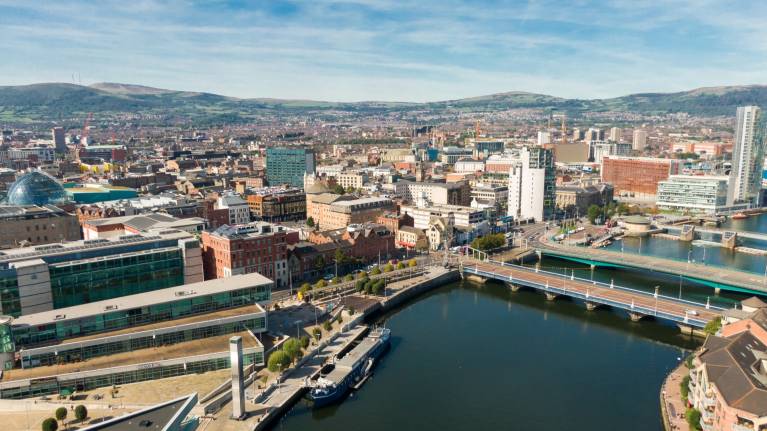

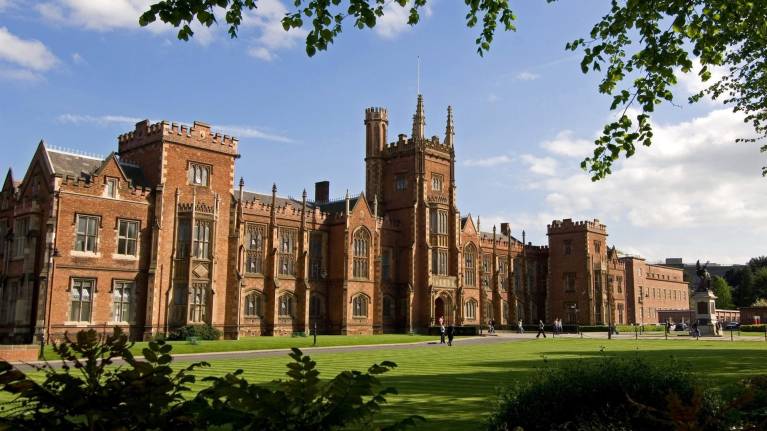

Belfast is a maritime city built around the mouth of the River Lagan on Northern Ireland’s east coast. Whilst the city has a long shipbuilding history, it’s most famously known for being the port from which the Titanic left for its maiden voyage before tragically hitting an iceberg. The impressive Titanic Museum tells a captivating story of its unfortunate fate. The city suffered more trauma during The Troubles, a 30-year-long political conflict with the Republic of Ireland between the 1960s and 90s, which has left its mark to this day. As you explore the city, political street murals, damaged buildings, and the Peace Wall in particular, remain to remind you of the events. Yet, you can’t help but feel the jolly Northern Irish spirit fill the air (and especially its pubs) everywhere you go from the creative Cathedral Quarter to the laid-back Queens Quarter.
Belfast International Airport (BFS) offers direct flights to and from most major cities within Europe. Those travelling from outside of Europe can take connecting flights via major cities including London, Paris, and Amsterdam. The airport is 24 km west of Belfast, which can be reached in around 35 minutes by taking the 300A Belfast bus to the Europa Buscentre.
Belfast is usually cold in March, with highs of 8°C and an average temperature of 6°C. The climate tends to be wet, with an average 58% chance of rain each day.