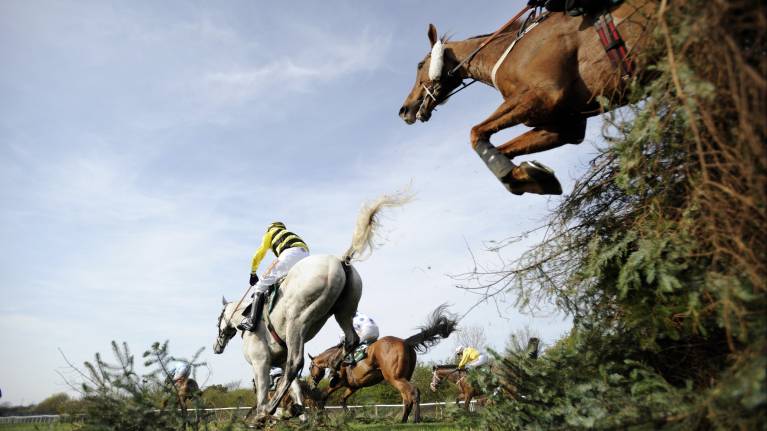
Saturday’s Grand National saw Rachael Blackmore become the first female jockey to win the historic steeplechase. But Blackmore has spent her successful career shunning the branding of ‘female’, wanting merely to be recognised as a great jockey. Indeed, after the race, she gave perhaps the least pretentious statement: “I don’t feel male or female. I don’t even feel human”. Despite reluctantly taking on the title of ‘first female to ride a Grand National winner’, Blackmore will surely be delighted to become a jockey whose name goes down in history.
Born in County Tipperary, Ireland in 1989, Rachael Blackmore grew up on a dairy farm and began competing as an amateur jockey while at university. It was as an amateur that she won her first race in 2011. After turning professional and riding several successful seasons, she was already regarded as one of the finest in National Hunt racing, even before she stole the show at the Cheltenham Festival earlier this year. At the meeting, she became the first female jockey to ride a Champions Hurdle winner and – due to her 6 wins over the 4 days – the first female jockey to win the Ruby Walsh Trophy for leading jockey at Cheltenham.
It has been 44 years since Charlotte Brew became the first female permitted to ride a horse in the National, and only eighteen other women have done so since. It was not until recent decades that the riding talent of women has been recognised as equal to that of their male counterparts. When Katie Walsh finished third on Seabass in 2012, she recognised how trainers and owners were beginning to see that skill and entrust female jockeys with their superior horses.
Blackmore’s victory seems particularly poignant after the suicide of Aintree’s beloved chairman Rose Paterson last summer. This year’s meeting consistently and aptly paid tribute to the late champion of women in racing.
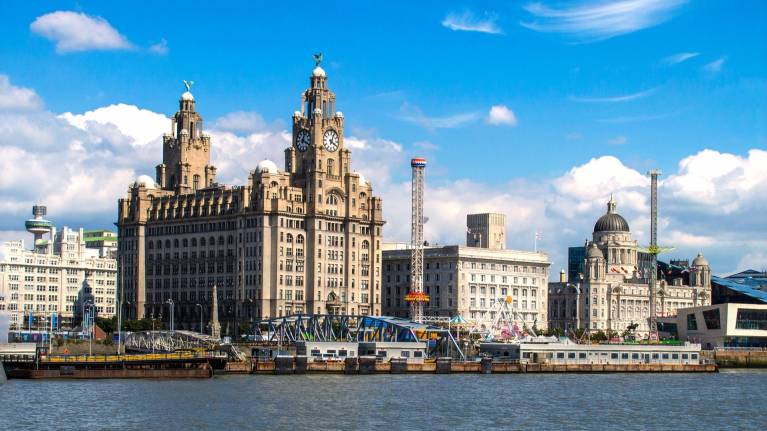
First run in 1839, the Grand National at Aintree Racecourse, just outside Liverpool, is a National Hunt (or Jump) race with up to 40 horses competing for the prestigious victory. Its notorious unpredictability makes it popular event among those who do not normally follow horse racing. Blackmore – in the sturdy saddle of JP McManus’ Minella Times, trained by Henry de Bromhead – held a steady position throughout the race. Despite running well, the pre-race strong favourite, Cloth Cap , finished his race at the 28th fence, and other solid opponents such as the 2019 Irish Grand National winner, Burrows Saint , could not rival the final straight pace of Minella Times.
As we enter into the beating heart of the flat racing season – and the much-anticipated return of spectators - in the next few months, we look forward to seeing more history-making performances, perhaps from great female flat racing jockeys. Royal Ascot is from 15-19 June and a limited number of tickets are set to be released soon. The July Festival at Newmarket is from 8-10 July and tickets are on sale now.