

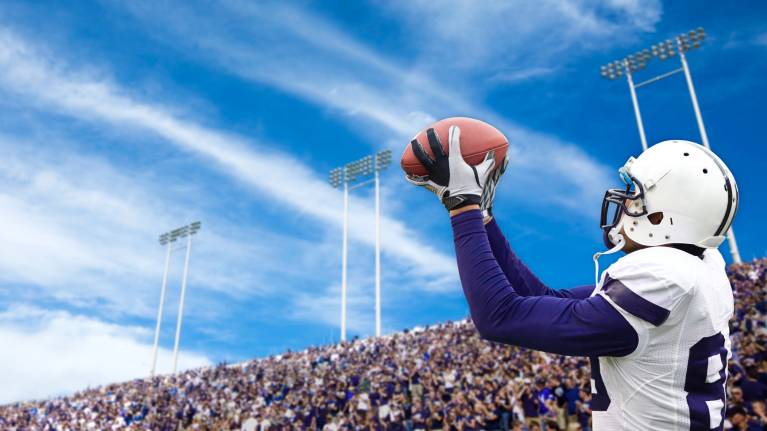
Home to the very best in American football, the National Football League (NFL) is the pinnacle of the USA’s favorite sport and one of the most popular sports leagues in the world. In 2023, NFL games welcomed close to 19 million fans and contests are known for their passionate crowds and hard-hitting on-field action. At an NFL game you can expect soaring passes, bone-crushing tackles, and nail-biting drama as power, speed, and athleticism combine to create one of the most vibrant spectacles in sport. More than just 4 quarters of football, NFL games are also famous for pre-game tailgate parties and live entertainment, as well as a huge range of classic American concessions - all of which will be covered in this helpful guide. And if you’re still looking for tickets, check out our Buying NFL Tickets Guide for a closer look at how to secure your seats.
- What to Bring and Wear
- When to Arrive
- Venue Parking and Transport
- Entry Gates
- Finding Your Seat
- NFL Format and Schedule
- Crowds and Other Fans
- Taking Photographs and Videos
- Autographs
- Merchandise
- Food and Drink
- Toilets/Restrooms
- Leaving and Exiting the Venue
- Make the Most of It
What to Bring and Wear
The only way to get into an NFL game is with a ticket, so – though it might sound obvious – this is the most important thing to bring. Since 2020, NFL tickets are almost always digital, rather than physical, so it’s likely that you will need a smartphone containing the ticket seller’s app in order to present your ticket at the gate on gameday. On rare occasions, you may be able to print your ticket at home and bring a physical copy, but this is only if specified by the ticket seller. For more information, check directly with the seller.
There is a strict bag policy at all NFL games. Though the league suggests that you bring a bag only if necessary, fans can enter with one large clear bag (either a one-gallon Ziploc style bag or a 12" x 6" x 12" clear bag), as well as one non-clear bag that is 4.5" x 6.5" or smaller.
Prohibited items common across all NFL stadiums include:
- Bags which do not meet NFL bag policy guidelines
- Seat cushions larger than 18" wide
- Metal/glass containers and ice chests
- Alcohol
- Banners, signs or flags
- Large golf-sized umbrellas
- Laser pointers
- Single-purpose video cameras
- Weapons
- Any animal (with the exception of a service animal)
- Battery packs with AA, C or D cell batteries
- Standard size (or larger) footballs
Regularly permitted items include:
- Clear bags that meet NFL bag policy guidelines
- Additional clothing (jackets and blankets may be carried in hand)
- Diapers in an approved clear bag (diaper bags are not permitted)
- Still-photography cameras with a lens of 6" or less in length
- Binoculars
- Cell phones
- Foam seat cushions under 18 inches wide with no cover
- Portable phone chargers
- Small collapsible umbrella strollers
Outside food and drink is also prohibited at some venues, but others will allow you to bring single portions of food contained in an approved clear bag, and an unfrozen non-alcoholic beverage in a factory-sealed bottle. For specific stadium rules, please check your chosen venue’s website before gameday.

Unless you have a ticket for a premium area of the stadium that directly specifies something different, there is no strict dress code when attending an NFL game. What you wear will likely be dictated by the weather, and the venue you are visiting. NFL games are played between September – January, and NFL teams are located across the entire United States, meaning weather can vary greatly. For instance, snowstorms and sub-zero temperatures are common in many cities, including Green Bay, Wisconsin (home of the Packers); Buffalo, New York (home of the Bills); and Kansas City, Missouri (home of the Chiefs). Similarly, Seattle, Washington (home of the Seahawks) is known for heavy rain, and Miami, Florida (home of the Dolphins) can have high temperatures. In the days before the game, remember to check the weather and dress accordingly on gameday. To help you work out whether you’ll need sunscreen or a rain jacket, Koobit lists current and average weather information on its event pages.

Another consideration for your trip to an NFL game (and one that is linked to the weather) is the venue you will be visiting. Ten NFL stadiums currently boast fixed or retractable roofs to protect fans and players from the elements. As a result, the heat might not be such a factor if you are visiting State Farm Stadium in Glendale, Arizona (home of the Arizona Cardinals), while snow and cold temperatures will be mitigated at US Bank Stadium in Minneapolis, Minnesota (home of the Minnesota Vikings).
Finally, you’ll see plenty of fans wearing jerseys, t-shirts, face paint, team-related costumes, headwear (like the Green Bay Packers’ “cheesehead” hat) and more during your trip to an NFL game, so feel free to wear team colors and show your support. Fans are welcome to openly root for the home or away team, but be aware that, if you are wearing road team merchandise, you are likely to be heavily outnumbered and may have to endure some friendly banter from the home crowd. If you are on the lookout for team merch, check out official NFL merchandise on Fanatics.
When to Arrive
Most NFL stadiums open 1.5 – 2 hours before the game begins, but it’s best to check the venue’s official website to confirm. Parking lots commonly open around 4 – 5 hours before kickoff.
It’s best to arrive early to an NFL game to avoid traffic and crowds. For fans heading straight into the stadium, arriving 1–1.5 hours before kickoff should give you ample time to enter, explore the stadium, visit concession stands, and find your seat. Try to be in your seat at least 20 minutes before kickoff to catch the player introductions and national anthem.
If you want to enhance your gameday experience, why not join a tailgate party before the game. Tailgating involves fans organising pre-game parties in the parking lot, often featuring food, drink, music, games, and the chance to socialize with like-minded fans. Tailgating is usually arranged by word-of-mouth, so to find out more, visit fan forums, speak to home fans before the game, or just head to the venue's parking lot around 2–3 hours before the game and soak up the atmosphere. Check your chosen venue’s website for specific tailgating information, including the location and what you can/can’t bring. Organised tailgates may require a contribution for food and drink, payable to the organiser.

Venue Parking and Transport
NFL venues are enormous stadiums that usually have extensive onsite parking to match. Driving is one of the most common ways to get to a game as parking is generally easy to come by, as long as you plan ahead.
The best way to secure parking at an NFL game is to book well in advance. Pre-paid parking is generally available to purchase via the home team’s website, and for some team’s, parking must be purchased before the day of the game. Purchasing parking in advance can help towards creating a smoother gameday experience, and allow you to arrive at a time that suits you best. However, if you want to avoid traffic, it’s still best to arrive early.
Some teams, though increasingly few, offer first-come, first-served parking on the day of the game. If you choose this option, make sure to arrive in plenty of time to give yourself the best chance of a space. Payment is usually by card, but can sometimes be cash, so it’s best to check the relevant team’s website to confirm.
If you are unable to secure stadium parking for gameday, public parking facilities should be available nearby as a backup. From surface lots to garages, useful apps like SpotHero and ParkWhiz can help you find public parking to fit your budget.

No matter which parking option you choose, the volume of traffic on gameday can make entering and exiting parking lots slow, so be prepared for congestion near the stadium and plan for your journey to take longer than usual. NFL parking can cost anywhere between $25 – $100, with the best prices available for those who book in advance. For the latest parking information, check the home team’s website.
Of course, while driving is popular, there are many other ways to travel to an NFL game. Taking public transport is a quick, easy, and environmentally-friendly way to travel, and as many teams are located in major US cities, buses, trains, subway systems, and rideshare operators are usually easy to find. However, the ease and availability of taking public transport to an NFL game can vary greatly depending on the location. For example, if you are seeing the Giants/Jets in New York or the Bears in Chicago, there are numerous train and bus services that will get you to your destination. On the other hand, taking public transport to see the Dallas Cowboys in Arlington or the Chiefs in Kansas City can be a lot more difficult as these teams have home venues further away from Downtown areas, and suitable services can be very limited.
Whether you opt to take the car or choose public transport, remember to check for travel closures and keep abreast of the latest traffic updates to ensure you make the game in plenty of time. For more information on traveling to an NFL game, visit the relevant stadium’s Travel & Parking section.
Entry Gates
With capacities ranging between 61,500 – 82,500, NFL stadiums are some of the biggest in the world of sport. As a result, all venues have anywhere between 5–12 entry gates to allow quick and smooth entry for fans. In general, entry is only available via the assigned gate on your ticket, but this can sometimes vary depending on the venue, so just check with a member of staff if you are unsure.
As all NFL tickets are now digital, or at least contain a scannable code, fans can expect their ticket to be scanned by a member of staff or automated scanner in order to gain entry to the game. Significant security measures are also commonplace at all NFL games, so be prepared to pass through metal detectors, x-ray machines, or have your bag checked on your way into the stadium.
While it should not take long to get into an NFL stadium, it’s advisable to arrive plenty of time before kickoff as security checks may lead to slower entry at peak times. Entering the venue may take longer ahead of playoff games or games against rival teams. It’s best to avoid arriving just before the game begins as this will be a busy time for entry with many people rushing to make it inside before kickoff.

Finding Your Seat
Finding your seat at an NFL venue can seem daunting due to the size of the league’s stadiums, but in reality, it shouldn’t be difficult, especially if you arrive in plenty of time.
Modern NFL stadiums are generally variations on traditional “bowl-shaped” venues, with seating split across multiple tiers, or levels. Depending on the stadium, it’s usually possible for standard ticket holders to visit most regular stadium levels (club levels require more premium tickets) but you must sit in your ticketed seat.
When searching for your seats, there are often 3 key pieces of information to look out for: a section number (124, 225, 312), a row (usually letters, like A, U, LL), and a seat number (09, 36, 102). Section numbers are especially important as they give you the best general idea of where you will be sitting. A section number in the tens or 100s will usually be located on the lower levels, with 200s above, 300s above that, and so on. However, this is not always the case, and as new NFL venues are being built all the time, conventions may change. If you are unsure about where you are sitting, refer to the venue seating chart or speak to one of many members of staff who will be located in the concourse and near seating sections.

Before the game, it’s best to arrive at your seat between 40–90 minutes before kickoff if you want to see the players warming up. If warm-ups are not your thing, you probably want to be in your seat at least 20 minutes before kickoff to avoid any pre-game rush. This also means you won’t miss player entrances and a performance of the national anthem.
Once the action begins, you are free to leave your seat at any time during an NFL game, however, you’ll miss less of the action, and be less likely to disrupt your fellow fans, if you choose to visit the concourse during breaks between quarters or at half-time.
For more information, as well as details on specific ticket types available at NFL stadiums, visit Koobit’s Buying NFL Tickets Guide.
NFL Format and Schedule
NFL games last just over 3 hours, but can be longer if teams are tied and the game goes to overtime.
Games are divided into 4 quarters of 15 minutes each. A short break of 2–3 minutes takes place between quarters, as well as when the clock hits 2 minutes in both the second and fourth quarter. This is called the Two Minute Warning.
At regular NFL games, the half-time break lasts around 12–15 minutes. Half-time at the Super Bowl is significantly longer to accommodate for the famous Super Bowl Half-Time Show, which has featured the likes of Usher, Rihanna, Shakira, and Lady Gaga in recent years. Occasionally, games outside the Super Bowl may also have half-time entertainment, but pre-game entertainment, both on-field and in the area around the stadium, is more common. Look out for live music, fan zones, and more in the area directly outside the stadium before kickoff. Check the home team’s social media for the latest updates.
Crowds and Other Fans
NFL crowds are known for their loud and passionate support. On gameday, stadiums are a sea of color as fans show their support and back it up vocally. Atmosphere can vary depending on the game and the venue. For instance, during the playoffs, or when rival teams come to town, NFL games can be raucous, intense affairs, with some of the best atmosphere in sport. Similarly, some teams are known for creating better atmosphere than others – Kansas City Chiefs crowds have been known to exceed 140 decibels, while a 2013 Seattle Seahawks crowd was so loud they caused a minor earthquake. Understandably, this kind of noise and atmosphere is not often replicated by fans of teams that are underperforming, and franchises with poor win/loss records may have sparser, more subdued crowds.
One unique tradition that first-time fans may want to know about is exactly when to cheer or make noise. During an NFL game, fans are encouraged to make as much noise as possible when their team is on defense (does not have the ball), and stay quiet when their team is on offense (has the ball). This makes it easier for the offensive team to communicate, and therefore, increases their chances of scoring. Loud home crowds can make things very difficult for the road team and can even cause miscommunication on-field, resulting in penalties for infractions like false starts (when an offensive player moves out of their set static position before the ball is snapped). If you're ever unsure of crowd etiquette regarding noise, just watch fans around you or follow directions on screens around the stadium.
As most NFL stadiums are fairly new, or at least regularly updated, modern seating and concourses allow for a comfortable experience that is not overly cramped or restricted. SoFi Stadium in LA, Mercedes-Benz Stadium in Atlanta, and US Bank Stadium in Minnesota are some of the newer stadiums with the most modern design features and amenities.

Taking Photographs and Videos
Video cameras are prohibited at NFL games, but fans may bring still-photography cameras with a lens less than 6", as well as binoculars and cell phones. Any photographs or videos you take during the game are for personal use only and must not be reproduced or re-broadcast.
Autographs
It’s possible to get autographs from players at an NFL game, but not all that easy. If you want to try for autographs before the game, arrive early, when gates open if possible, and wait in the front row close to where the player’s from your team are warming up. From here, you may be able to catch a player’s attention and ask for an autograph, but it’s also important to remain respectful and remember that this may not be possible as players are trying to prepare for a game.
After the game, some fans gather close to the players tunnel and try their luck for autographs as players are leaving the field. Similarly, some teams have designated areas in which fans can get post-game autographs. This is not the same for all teams, so it’s best to check the home team’s social media and official website for the latest details.
Merchandise
Merchandise for the home team will not be difficult to find when you head to an NFL game, and all stadiums feature megastores and numerous smaller merchandise stands. However, if you’re looking to avoid long lines, or want to have a team jersey, cap, or t-shirt to wear ahead of gameday, then it's best to buy online in advance, where prices may also be significantly cheaper. Visit Fanatics, the NFL’s official merchandise partner, for a closer look at all the merchandise available.

Food and Drink
You’ll never go hungry or thirsty at an NFL game, and food and drink is all part of the gameday experience. Some venues boast over 100 concession stands, and with teams capable of making more than $2 million on concessions at a game, NFL stadiums aim to cater for all tastes and requirements.
When it comes to food and drink, American classics like hot dogs, chicken wings, burgers, nachos, beer, and soda are some of the most common items you’re likely to find at an NFL stadium. However, evolving tastes and changing diets have led venues to increase the scope of their menus far beyond the traditional, and it’s now easy for fans to enjoy everything from premium restaurant-quality creations to vegan and gluten-free options. Some NFL concession stand favorites from recent seasons include:
- Bacon and jalapeno pierogies – Lincoln Financial Field, Philadelphia
- Vegetarian Street Tacos – Empower Field at Mile High, Denver
- Boulevard Bar’s Tempura Lobster Tails – Allegiant Stadium, Las Vegas
- Sheridan’s Frozen Custard – Arrowhead Stadium, Kansas City
- Treebeard’s Chicken and Sausage Gumbo – NRG Stadium, Houston
While you’re bound to find something you enjoy during your visit to an NFL stadium, some venues have better reputations for food and drink than others, with Mashed suggesting that Lincoln Financial Field (Philadelphia Eagles), NRG Stadium (Houston Texans), and AT&T Stadium (Dallas Cowboys) are among the very best. Price is another major factor when it comes to gameday concessions, and the truth is that most NFL venues can be very pricey. According to Statista, a 24oz soft drink cost as much as $8 at Tampa Bay’s Raymond James Stadium in 2023, while the average 12oz beer at Philadelphia’s Lincoln Financial Field cost over $11.50. This is not the case across the entire league though, and venues like Miami’s Hard Rock Stadium and New York’s MetLife Stadium tend to have some of the league’s cheaper options, while Atlanta’s Mercedes-Benz Stadium is the best spot for budget concessions, with hot dogs and soft drinks costing as little as $2.

Fans can enjoy food and drink, including alcohol, in their seats during an NFL game, but remember to factor in plenty of waiting time in case of long lines. As with restrooms, if you don’t want to miss any of the on-field action, the best time to head for the concessions is before the game begins. The NFL is also almost entirely cashless, meaning concession payments will need to be made by card. Stadiums generally have reverse ATM facilities for fans wishing to load their cash onto a free debit card for use inside and outside the stadium. For reverse ATM locations, check the stadium guide or ask a member of staff.
Finally, rules on bringing outside food and drink into the stadium differ depending on the venue, but it is common for venues to allow fans to take in food for personal consumption (sometimes in a clear plastic bag) and water in a factory-sealed plastic bottle. To confirm what you can take to your chosen game, visit the home team’s official website for full stadium information.
Toilets/Restrooms
Restrooms, accessible restrooms, and family restrooms can be found on all levels at NFL stadiums. Waiting in line for the restroom is common at NFL games, but your experience is likely to vary depending on the venue. For instance, US Bank Stadium in Minnesota has almost 1,000 restrooms for fans, while State Farm Stadium in Arizona has just over 50. As a general rule, newer stadiums should have shorter waits at restrooms and the facility you require should never be more than a section or two away.
When it comes to the best time to go, half-time and quarter breaks are popular times for restroom breaks, so you might need to be prepared to wait in line. The best time to visit the restroom is before kickoff, but if you need to go in the game and really want to avoid waiting, then you may want to slip out during the action.
Leaving and Exiting the Venue
Fans can, of course, leave the stadium (with no re-entry permitted) at any point during an NFL game, but most will choose to exit when the game ends. If the home team wins, exiting may take longer than if the home team loses, which may lead to more fans leaving early. Generally, crowds are well-managed and stadiums are empty of most fans within 30 minutes of the game ending, but it could take up to an hour to leave busy parking lots at some venues, so it’s best to be prepared for a wait if you are driving. Stadiums located out of town may have more parked cars and fewer public transport options, which could result in a slower exit. Venues in more central city areas, like Chicago’s Soldier Field, may be busy with fans in the area directly surrounding the stadium, so you might have to walk a block or two to find quieter public transport and shorter waits for rideshares.

Make the Most of It
NFL games are huge, larger-than-life spectacles unlike anything else in the sporting world. A day-long celebration more than just an on-field contest, an NFL game is a chance for fans to enjoy the best America has to offer in terms of food, drink, live entertainment, hospitality, and of course, sport. To experience the NFL at its fullest, get to know other fans, spend plenty of time in and around the stadium, and embrace the league’s famous blend of tradition and modernity, skill and strength, noise and color. Remember, planning ahead and staying flexible can really help when navigating unfamiliar places and any unforeseen events that may occur on gameday, but ultimately, relax, have fun, and enjoy your day at an NFL game – one of sport’s greatest experiences!