

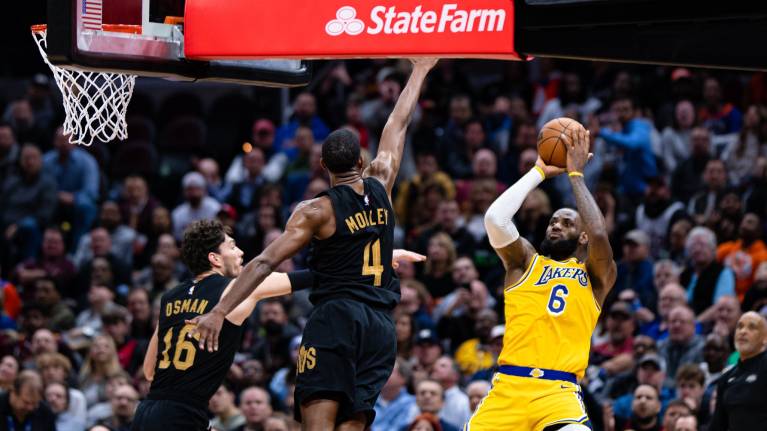
Ask any NBA fan who’s attended a game in person, and they’ll tell you it’s the best way to experience the world’s premier basketball league. It’s all well and good watching on TV, but when they’re live and in person you can get a true appreciation of the size and athleticism of your favourite NBA stars – who may be just a few feet from where you’re sat, depending on the location of your seats! Factor in the electric atmosphere – which gets dialed up to 11 during a Steph Curry buzzer-beater or a LeBron James masterclass – and the overall gameday experience, and you’ve got a bucket-list entry for any basketball fan.
To help you pick the game and the tickets that are right for you, check out our Buying NBA Tickets Guide. Whichever team you’re endeavoring to see, this handy guide is here to help you maximize your NBA experience at your chosen game or event.
- What to Bring and Wear
- When to Arrive
- Venue Parking & Transport
- Entry Gates
- Finding Your Seat
- Game Format & Schedule
- Additional Entertainment
- Crowds and Other Fans
- Taking Photographs and Videos
- Autographs
- Merchandise
- Food and Drink
- Toilets/Restrooms
- Leaving and Exiting the Venue
- Make the Most of It
What to Bring and Wear
The most important thing to remember to bring is, of course, your tickets! Whether they’re e-tickets on your phone or physical stubs, you won’t be allowed into the venue without them, so naturally these are paramount to your gameday experience running smoothly. It’s especially important to keep your phone charged if you have e-tickets, although it’s a good idea regardless – you can't grab a selfie with your favourite player or order an Uber home if the battery has died!
Basketball is an indoor sport with no formal dress code, so you can more or less wear whatever you wish to the game. If you’re sitting in hospitality or have managed to grab courtside seats, you may want to dress a little smarter – after all, you may end up on TV! – but ultimately you can just wear whatever’s comfortable.
If you’re there to support the home team and have a jersey or any other merchandise, you can always wear that. If you need some merch to wear, check out the Merchandise section on Koobit’s NBA page. Compared with some other sports such as soccer, there’s not much of an away fan culture in the NBA, but even so it may not go down well with the home crowd if you’re repping the visiting team.

Being an indoor sport, you won’t need to worry about the elements during the game – no need to worry about slathering on sunscreen or remembering your umbrella. However, it’s worth remembering that the NBA runs over the winter, and it may be very cold when you leave a game, particularly those in cooler parts of the country or fixtures that finish late at night. Koobit’s event page Destination tabs show you both the current weather and average weather for the time of year – check the forecast ahead of time and bring a coat if it’s going to be wet or chilly.
In terms of what else to bring – or what not to bring – it will vary from venue to venue, particularly in terms of bag policy. Many strictly prohibit all backpacks but allow smaller bags of other kinds, while some such as the Crypto.com Arena do not permit bags of any size. Other commonly prohibited items include weapons of any kind, laser pointers, and selfie sticks. Check the prohibited items list for the specific stadium you’ll be visiting prior to leaving the house.
When to Arrive
When is best to arrive at an NBA game largely depends on what you want to get out of the experience. If you’re there to see the game and little else, then there’s nothing wrong with arriving shortly before tip-off and heading straight for your reserved seats.
However, if you’re hoping for a more comprehensive NBA experience, there’s a lot to be gained by arriving early. Doors usually open either 60 or 90 minutes before tip-off, unless you’ve got VIP or hospitality seats, in which case they may open for you 90 or 120 minutes prior; this will vary from venue-to-venue, so check on the stadium’s website ahead of time. If you plan on arriving when doors open, it may even be worth arriving 15 minutes prior to that in case there’s a line. Parking (if you’re driving to the game) and getting through security can also take longer at some venues than others – if it’s your first time visiting an arena it’s better to play it safe.

By arriving early, you’ll have plenty of time to explore the stadium and purchase concessions. You’ll be able to buy food and beverages right up until the game finishes, but it’s always better to do so before the action starts and the venue fills up – you could find yourself missing a lot of the action while stuck in a lengthy queue otherwise.
What’s more, you’ll also get the chance to watch the players warm up ahead of the game; if you’re lucky, you might even interact with them for a selfie or an autograph, although this is not guaranteed. You’ll also get to take in any pre-game entertainment such as cheerleader performances, mascot shenanigans, or national anthem renditions.
Venue Parking & Transport
NBA venues are primarily located in major cities around the United States and Canada, often downtown or close by. As such, most stadiums have an abundance of public transport links close by for maximum convenience, as well as multiple parking garages – either official or third-party – within walking distance, so there’s usually plenty of choice. The exact options available will naturally vary from venue to venue and city to city, so be sure to check out Koobit’s Travel & Parking tab on the event of your choice for more information.
If you’re driving to the game, bear in mind that you’ll have to contend with traffic as you travel to and from it; if you’re attending an evening game on a weeknight and want to get there for doors open, you may find yourself driving through a busy downtown area during rush hour. Once you get close to the venue, you should account for parking and then entering the stadium to take around 30 minutes, depending on the exact distance you’ll need to walk. To save time and ease any concerns about parking lots filling up, it’s always best to pre-book a space in your chosen lot in advance. You can find out more about pre-booking parking in our Buying NBA Tickets Guide.
Many venues have designated taxi or rideshare pick-up and drop-off locations close by so they can be convenient methods of arrival or departure, just bear in mind that demand will be high after the game finishes. If you’re utilizing public transport services like the bus or metro, make sure they’re still running after the game ends. Games typically take around 2 and a half hours and will usually finish at a reasonable time, but they can sometimes finish later than planned if overtime periods are needed.
Before setting off, be sure to check your route planner in case there are any road closures, delays, or cancelled services that might affect your trip.

Entry Gates
NBA venues typically have multiple entrances, a main entrance/atrium and then one or more on the other sides of the arena. As such, you should be able to find an entry quickly regardless of which direction you approach from – unless there’s a VIP entrance and you have the appropriate ticket, it does not usually matter which entrance you use.
Upon arrival your tickets will be scanned, either by security staff or a machine – if using an e-ticket, make sure you have it loaded on the relevant app, as scanners usually won’t accept screenshots. At many venues you’ll also have to pass through metal detectors and a security/bag check before you’ll be allowed into the building. Overall, this could take up to 15 minutes at busier times if there’s a queue. Fortunately, due to the multitude of entrances at most arenas and fans arriving at different times, it will rarely take longer than that.
Once inside the venue, you may need to present your ticket again to enter certain parts of the arena such as the suite level or hospitality areas to verify you have the appropriate access.
Finding Your Seat
NBA arenas are typically split into 2 or more tiers. For example, the Los Angeles Lakers’ Crypto.com Arena is split into 3 main tiers; lower (100 level), middle (200 level), and upper (300 level). Some larger venues, such as the New York Knicks’ Madison Square Garden, go up to the 400 level. Each of these levels will be divided up into numbered sections such as 101, 102, 103, and so on, and from there you’ll simply need to find your row and seat, which should be clearly labelled. It’s typically a straightforward process, but arena staff and security will be on hand to direct you if you require.
You can head straight to your seat as soon as you enter the venue or explore the amenities first. If you go for the former, unless you’re in the middle of a row, you may find yourself standing up to let people past you quite a lot as the arena fills up. Leg room will vary between venues, but the space between rows will often be fairly narrow – if you need the room, you might want to consider buying aisle seats or premium/club seats, as these will often be more spacious. For more information on the different types of tickets available, our Buying NBA Tickets Guide is here to help.
If you need to get up during the game to use the bathroom or grab some refreshments, it’s best to wait until a break in play, such as between periods or during a timeout. There’s nothing stopping you moving around while the game is going on, but it’s important to be courteous to your fellow fans – nobody wants to have their view blocked during an exciting play.

Game Format & Schedule
NBA games are made up of 4 quarters of 12 minutes apiece, for 48 minutes of total play time. If the teams are tied at the end, they will proceed to play overtime periods of 5 minutes apiece until a winner is found. There are breaks of 2 minutes and 30 seconds between quarters and overtime periods (or 3:30 for national TV games) and a 15-minute half-time break between the 2nd and 3rd period. Each team can also make 7 timeouts during regulation play, and there are 2 mandatory timeout periods in each quarter. Mandatory timeouts take 2 minutes and 45 seconds (or 3:15 for national TV games), while additional timeouts are limited to 75 seconds. In total, games typically take around 2-and-a-half hours on average.
Prior to the game and during breaks in play, you can expect a variety of in-arena entertainment; musical performances, cheerleader routines, mascot shenanigans, kiss cams and celebrity lookalikes on the jumbotron, fan contests on the court, and more.
Additional Entertainment
Some NBA arenas will have fan zones set up outside their main entrance or atrium for spectators to enjoy ahead of the game. These can feature food and drinks for purchase, face-painting, live performances, and more, so they’re all the more reason to arrive early and get the full gameday experience!

Crowds and Other Fans
The atmosphere at NBA games can vary significantly from team to team and game to game. The large volume and frequency of regular season games, coupled with ticket prices that can at times be very expensive and price out many diehard fans, means that NBA crowds can sometimes be much more subdued than in other sports. At other times – particularly during the playoffs and other important games between big rivals – the atmosphere can be as passionate and intense as you’ll find.
The Delta Center (home of the Utah Jazz), United Center (Chicago Bulls), and Madison Square Garden (New York Knicks) are among the venues particularly known for their noise, as is the Cleveland Cavaliers’ Rocket Mortgage FieldHouse – where the upper level is known as “Loudville”!
Crowds tend to be packed in fairly tightly at most arenas, so if you need some space you can step out onto the concourse for a breather. Some premium tickets also promise more comfortable seating with extra leg room or grant access to club or lounge spaces; while these areas will still fill up during the game, they tend to be quite spacious.
Taking Photographs and Videos
While spectators are typically prohibited from bringing professional cameras, video cameras, and recording devices into NBA arenas, there’s no limits on taking photos or short videos for personal use, whether you want to show off on the ‘gram or just have memories to look back on in the future. Please note, selfie sticks and tripods are invariably banned throughout NBA venues too.

Autographs
Some players may stick around to give some autographs after a game has finished – particularly if they were on the winning team – but your best chance of getting their signature or a selfie is to arrive early and stand by the tunnel when players emerge for warm-ups while stadium is still relatively quiet, or when they had back into the changing rooms after.
Some players will stop to interact with the crowd, some won’t – you’re much more likely to get an autograph from rookies than top stars like LeBron James or Steph Curry – and many will prioritize children and younger fans, but nothing is guaranteed.
Remember to be polite and respectful, and most importantly, remember to bring a marker pen and something for them to sign!
Merchandise
Arenas will usually have a kiosk selling home team merchandise, from hats to jerseys to the iconic foam fingers. However, you’ll often find a greater selection – and potentially better prices too – by buying online, which comes with the added benefit of being able to wear your merch on game day. You can find official NBA merchandise at the NBA store or at Fanatics.

Food and Drink
Most NBA arenas have a wide variety of classic stadium food options available from multiple concessions points throughout the venue, including hot dogs, nachos, burgers, popcorn, pizza, BBQ, and much more, as well as a range of alcoholic and non-alcoholic beverages. Vegetarian, vegan, and gluten-free alternatives are also becoming increasingly popular, so there should be options to cater to almost any taste.
Quality and price will vary significantly – both venue to venue and between outlets within the stadium – but at many arenas, particularly those that house the larger and more popular teams, concessions can be very expensive. You can easily pay in excess of $12 for a beer, while hot food items can cost $15-20 or more; if you’re buying for friends or family, this can quickly add up, so you may find it much better value to eat before you arrive. Outside food and beverages – unless medically necessary – are almost always prohibited.

Hospitality tickets will invariably be more expensive than standard seats, but these areas are often all-inclusive with buffets and chef stations serving stadium classics and more premium options – make sure to get your money’s worth if manage to secure these tickets! Some premium seating sections also have in-seat ordering, so you don’t have to miss a moment of the action. If you don’t have this option, you can avoid the worst of the queues by arriving early and purchasing your snacks before the action kicks off.
Venues are increasingly becoming cashless, so make sure to bring your credit or debit card with you.
Toilets/Restrooms
Toilets are plentiful in NBA arenas, so you’ll rarely be too far from a restroom. Many venues offer family or gender-neutral facilities too. Check out maps of the venue prior to your arrival to find out where the nearest toilets are to your seats.
The facilities will naturally be much cleaner and less busy in the build-up to the game, so it’s best to make use of them then if possible. Even during a break in play or at half-time, you may find yourself missing a lot of the action if you need to go once the game has started, and there will usually be one last rush to use them as people exit the venue too.

Leaving and Exiting the Venue
As with most sporting events, you’re free to leave at any time, and if it’s not a tight or important game, plenty of fans will make for the exits a few minutes before the end to get a head start on beating the traffic if they’ve parked at a nearby garage, where departing can be very slow after the game particularly if you’re on one of the upper floors.
If you’re there for the experience, attending the game is a one-off, or you don’t have an early start the next morning, staying behind to soak up the atmosphere and letting the crowd disperse can make for an enjoyable end to the evening, but if you’re going to be sat in the car for an hour trying to get away from the venue and work is beckoning the following morning, don’t have any qualms about dipping out before the buzzer goes.
Make the Most of It
For fans who have a season ticket or can attend games frequently, there’s always another encounter around the corner when each team plays 41 home games in the regular season. But for many, attending an NBA game is an experience to behold and a memory to cherish long into the future – even diehard fans will feel the same if their team reaches the playoffs. As such, it’s important to make the most of your time.
Plan accordingly for the live experience, anticipate minor delays or inconveniences, and arrive early to maximize your experience from start to finish, and you’ll be reminded why the NBA is beloved by millions of fans around the world. You can't guarantee if you’ll get that autograph or witness a Steph Curry buzzer-beater but follow the advice in this guide and you’ll still have a great time!